
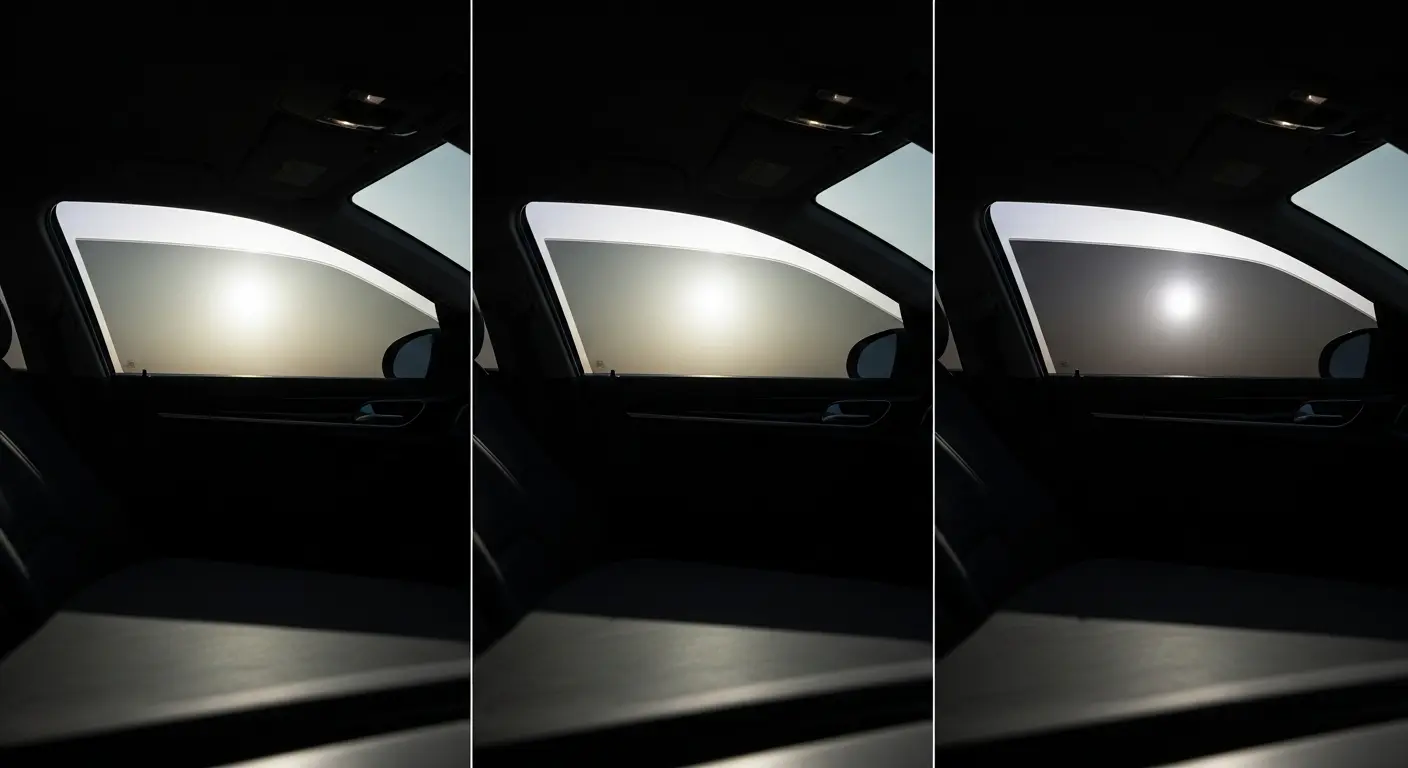
Choosing the right tint not only elevates the style of your car, but also shapes comfort, privacy, and protection for years to come. Let’s guide you through the most popular types of car window tint available, their advantages, and which one is best for you.
Understanding the Types of Car Tint
When people talk about types of car tint, they’re referring to the various materials and technologies used in window films. Each type offers its own blend of aesthetic, performance, and price.
Most Popular Types of Car Window Tint
1. Dyed Window Tint
- Appearance: Most affordable, darkest look from the outside.
- Performance: Basic heat absorption, good privacy.
- Downsides: Fades over time in harsh sun, lower heat rejection, can bubble or peel if poorly installed.
2. Metalized Window Tint
- Appearance: Shiny, reflective surface.
- Performance: Blocks UV rays, good heat rejection, adds strength to glass.
- Downsides: May interfere with electronics (GPS, radio), more expensive than dyed tints, visibly more reflective.
3. Hybrid Window Tint
- Mixes dyed and metalized layers for improved performance with less reflectiveness compared to purely metalized films.
- Offers balanced aesthetics and function, but still may partially affect electronics3.
4. Carbon Window Tint
- Appearance: Matte, non-shiny finish.
- Performance: Blocks up to 40% of solar heat, good UV protection, highly durable, does not fade, no signal interference.
- Cost: More than basic tints but generally less than ceramic.
- Suits those who want cooler interiors, low glare, and strong uv blocking window film properties without metallic shine. Carbon window tint is also darker than most ceramic tints.
5. Ceramic Window Tint
- Appearance: Sleek, clear to dark shades, non-reflective.
- Performance: Top-tier heat and UV rejection (up to 99%), blocks infrared rays, outstanding clarity in all lighting, no signal interference, extremely durable and fade-resistant, helps reduce glare.
- Cost: Highest price point due to advanced technology.
- Ceramic window tint is considered the highest quality, providing unmatched cooling, safety, and comfort, especially valued in hot climates.
- A true uv blocking window film: it’s the gold standard if you want comfort and health protection for family or passengers.
| Tint Type | Heat Rejection | UV Protection | Signal Interference | Durability | Price | Appearance |
| Dyed | Low | Medium | None | Fades | $ | Dark, flat |
| Metalized | Good | Good | Possible | Strong | $$ | Shiny, metallic |
| Hybrid | Better (than dyed) | Good | Minimal | Good | $$ | Semi-reflective |
| Carbon | Up to 40% | Up to 99% | None | Excellent | $$$ | Matte, dark |
| Ceramic | Up to 50%+ | Up to 99% | None | Best, doesn’t fade | $$$$ | Clear-dark, non-reflective |
Which is the Best? Ceramic vs Carbon Window Tint
- Ceramic window tint outperforms carbon window tint in heat rejection, UV blocking, infra-red shielding, longevity, and overall cabin comfort.
- Carbon window tint gives a darker appearance and is less costly than ceramic, with strong UV protection but lower heat and IR rejection.
- If you want maximum cooling, clarity, and longevity—especially for Indian summers, ceramic is worth the premium. Carbon is a strong choice if your top priority is appearance and simple protection.
UV Blocking Window Film: Health and Comfort
Installing a quality uv blocking window film can filter up to 99% of harmful UV rays, reducing skin disease risks and extending the life of your car’s interiors. Both ceramic and carbon options perform extremely well in protecting passengers and upholstery from sun damage.
Legal Tint Rules: Car Window Tint India
Proper compliance is crucial: In car window tint India, only films allowing at least 70% visible light transmission (VLT) on front and rear windshields, and 50% VLT on side windows, are legal. Going darker may incur penalties, so choose a professional installer who uses legal, high-performance films.
Best Tint Colour for Your Car
The best colour often depends on both style and function:
- Black and Charcoal: Universally appealing, pairs well with most vehicle shades, offers a sophisticated, clean look.
- Grey or Smoke: Ideal for silver, white, or blue cars; keeps the effect subtle while enhancing privacy.
- Reflective or Mirror: Makes a statement but can be flashy; these are often less legal in India due to reflectivity laws.
- Choose a tint that complements your car’s colour, while complying with local regulations for both aesthetics and function12.
Which Types of Tint to Choose?
Ultimately, among all types of tint, consider these points:
- Ceramic window tint: Premium protection, top performance, legal even in light shades, best for heat and UV rejection.
- Carbon window tint: Deep matte finish, affordability, fade-proof, superb privacy for less than ceramic.
- Dyed and hybrid: Budget-friendly for basic needs.
Conclusion: The Smart Choice for Indian Cars
With a variety of types of car window tint available, your best pick depends on budget, comfort priorities, and local laws. Ceramic window tint stands out for India’s intense sun—delivering maximum heat rejection, UV protection, clarity, and lasting value. If style on a budget is your focus, carbon window tint is darker and reliable. Always stay within legal tints, prioritize health with a quality uv blocking window film, and select a shade that elevates your car’s look and comfort.
Choose wisely, and enjoy a cooler, safer, and more stylish drive on Indian roads.