
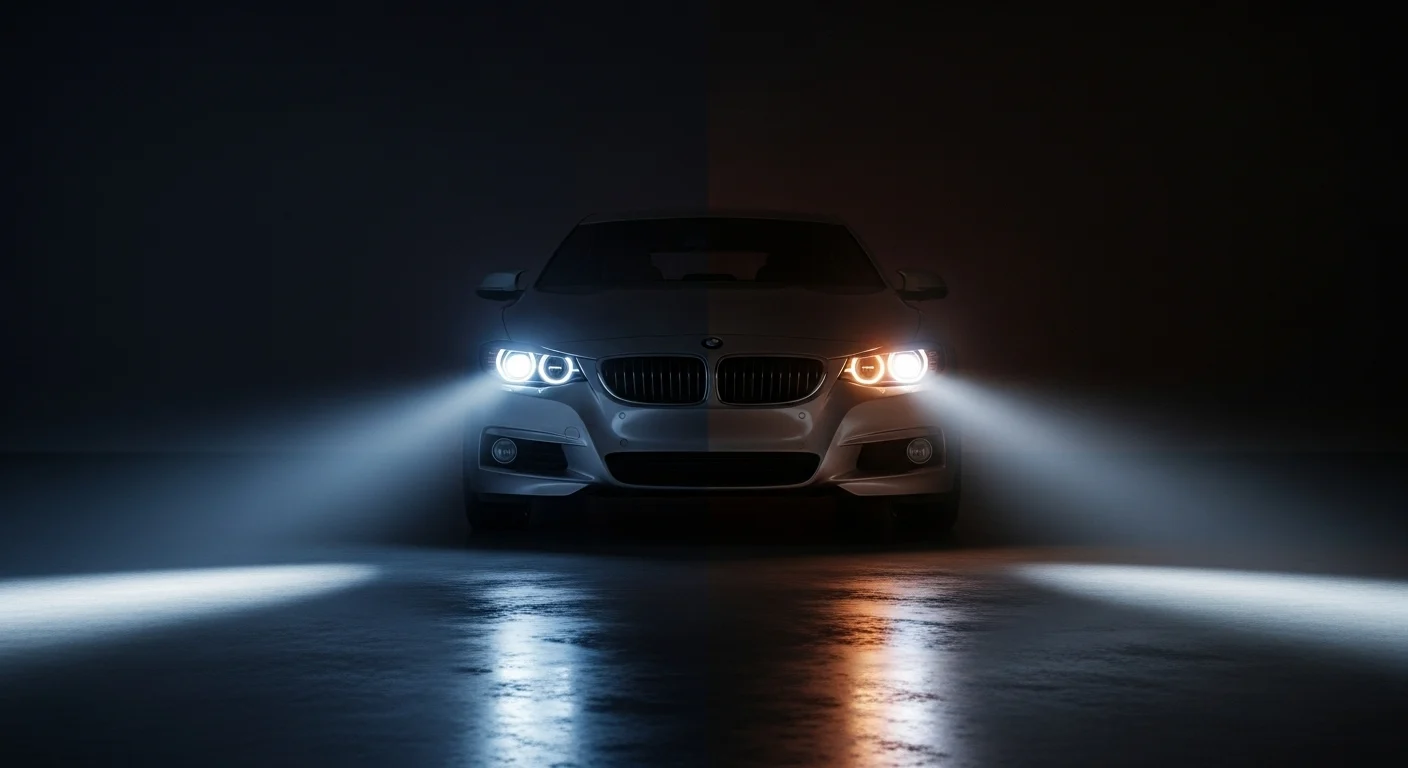
Upgrading your car’s lighting is one of the most impactful changes for both safety and style—especially on Indian roads with unpredictable lighting conditions, fog, rain, and unexpected hazards. One of the most common car headlight comparison dilemmas today is LED vs HID headlights. Which technology truly gives you better visibility, efficiency, and value? Let’s break down the details so you can make the best choice for your car.
Car Headlight Comparison: LED vs HID Basics
Both LED (Light Emitting Diode) and HID (High Intensity Discharge / Xenon) headlights offer dramatic improvements over old-school halogen bulbs. Here’s how they differ:
- LED Headlights use semiconductors to create intense, focused light. They are energy-efficient, last much longer, and switch on instantly.
- HID Headlights use an electric arc through xenon gas, producing a powerful, wide beam with good distance. However, they require a short warm-up time to reach full brightness.
Key Features & Technology What Sets Them Apart
| Feature | LED Headlights | HID Headlights |
| Brightness | Up to 10,000 lumens (very bright) | Up to 8,000 lumens (bright) |
| Lifespan | 30,000–50,000 hours | 2,000–5,000 hours |
| Efficiency | 85–90% | 70–80% |
| On/Off Speed | Instant | 2–10 seconds warm-up |
| Power Draw | Low | Medium |
| Colors Available | All colors (focus on 6,000K white) | Yellow, white, blue, purple |
| Heat Emission | Low | Medium/High |
| Installation | Plug-and-play kits, often simpler | Projector/bulb/ballast swap |
| Price | Costlier upfront | Less expensive |
| Best For | Reflector assemblies, city driving | Projector assemblies, highway |
| Beam Pattern | Focused, less glare | Stronger glare risk |
HID vs LED Brightness: What Matters Most?
When it comes to hid vs led brightness, both technologies are much brighter than halogen bulbs, but LEDs have taken the lead with up to 10,000 lumens on premium models—compared to about 8,000 lumens for HIDs. LEDs also maintain consistent brightness without fading over time, while HIDs can gradually dim and take a few seconds to reach full output.
- HID headlights excel at throwing light far down the road (good for foggy highways), but can produce glare and aren’t as reliable in extreme temperatures.
- LED headlights deliver more instantaneous, intense light with sharper cut-offs and focused beams, reducing glare for oncoming traffic.
Durability & Maintenance
LEDs have the clear advantage in longevity—lasting 30,000 to 50,000 hours (or more), while HIDs typically last 2,000 to 5,000 hours before needing replacement. LEDs are solid-state, shock-resistant, and require less maintenance, making them especially well-suited to Indian city and rural roads.
Practical Considerations for Indian Roads
- Heat & Weather Resistance: LEDs emit less heat, reducing stress on the headlight housing—a bonus in hot Indian summers.
- Legal Fitment: Both LEDs and HIDs require proper reflector or projector housings. Improper installation can cause glare and may not be road-legal.
- Cost Factor: HIDs can be a budget-friendly upgrade over halogens; LEDs cost more upfront but offer long-term value due to their durability and low power draw.
- Projector vs Reflector: Projector headlamps work particularly well with HID bulbs, creating a broad, even spread. LEDs are versatile but work best in newer reflector-type assemblies designed for them.
Pros & Cons Snapshot
LED Headlights
Pros:
- Brighter and more focused light
- Instant on/off (no warm-up)
- Much longer lifespan
- Energy-efficient (lower battery drain)
- Lower heat output
Cons:
- Higher initial cost
- May require additional cooling (fans/heatsinks)
- Older housings may need a conversion kit
HID Headlights
Pros:
- Longer beam throw—great for highway and fog
- Affordable to install
- Multiple color options (white, blue, purple)
Cons:
- Takes seconds to reach full brightness
- Shorter lifespan; bulbs can fade or dim
- More heat, risk of glare if not aligned
- Can cause radio/electronic interference in some setups
Conclusion: LED vs HID Headlights—What’s Best for Indian Roads?
For most car owners in India, LED headlights now stand out as the better all-round upgrade. They’re brighter, faster, last much longer, put less demand on your battery, and offer a more focused, less glaring beam. HIDs are still a good alternative for those wanting a strong highway beam at a lower cost, but require more frequent replacements and careful installation to avoid glare.
When doing a modern car headlight comparison for Indian conditions—considering brightness, lifespan, efficiency, and the variety of legal assemblies—LEDs prove to be the smarter, future-proof choice for both city and highway driving. Choose a quality kit, ensure correct installation, and see the road like never before!