
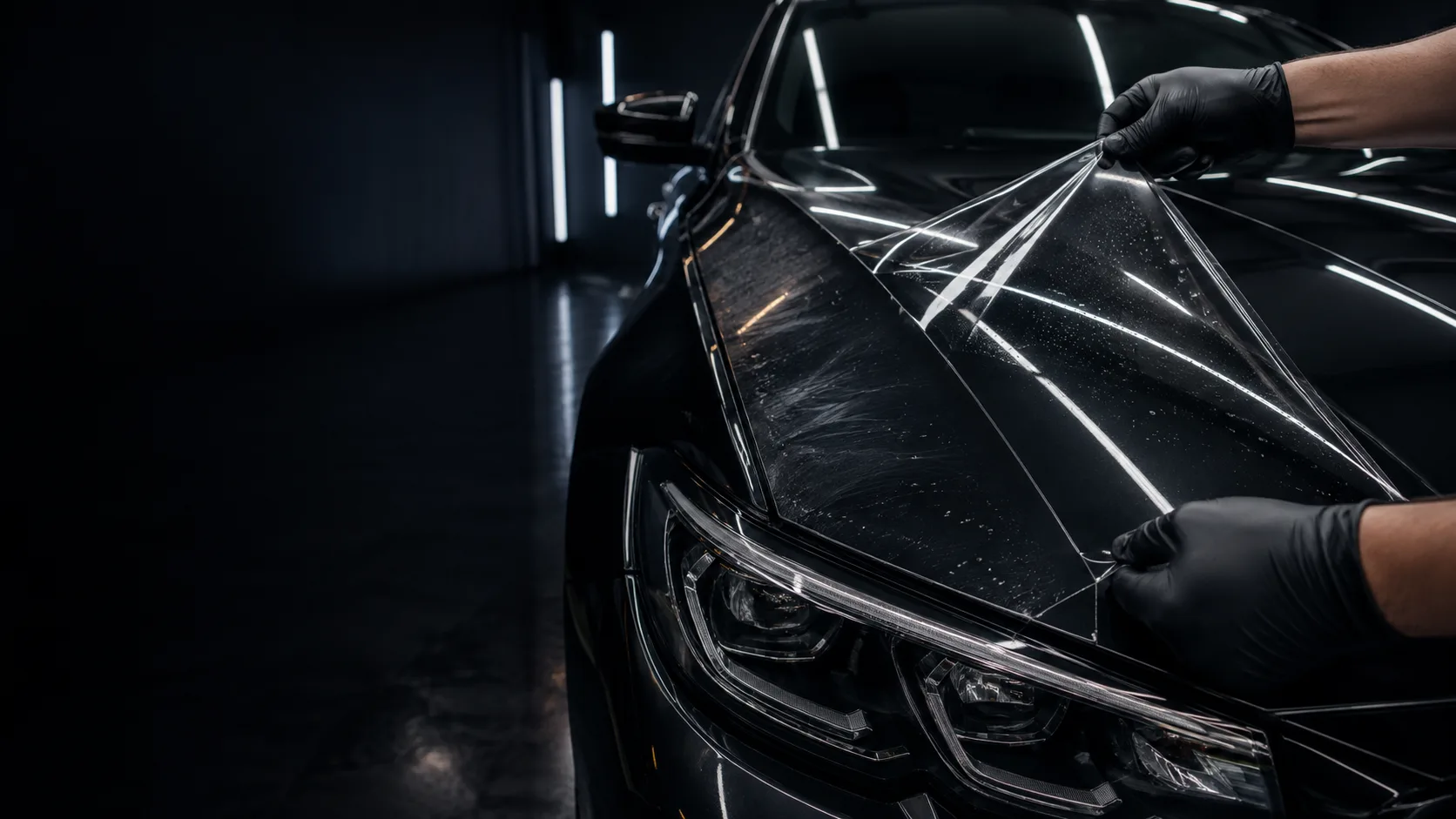
Walk around your car and divide the paint into exposure zones.
The bumper, bonnet, mirror caps and front fenders face stones and road debris. Door cups meet fingernails. Door edges touch walls. Sills collect shoe marks. The rear loading edge meets bags and luggage. Horizontal panels catch bird droppings, sap and hard-water deposits.
These risks are not equal, so paint protection film does not have to begin as an all-or-nothing purchase. The practical approach is to map where damage is most likely, understand what the film can stop and choose coverage around the car’s use, parking and ownership period.
Zone 1: The Front Impact Area
The front bumper, leading section of the bonnet, fenders and mirror caps receive debris thrown by vehicles ahead. A small stone can leave a pale chip where it breaks through the clear coat, especially on dark paint.
PPF places a replaceable urethane layer above the finish. It can absorb some energy from small stones and grit before the impact reaches the paint. This makes a front package logical for cars that use highways regularly or travel through construction-heavy routes.
The limit matters. A large stone, sharp object or forceful impact can cut the film, chip the paint or dent the panel. Protection means reducing common minor damage, not making the bodywork indestructible.
Zone 2: The Daily Contact Points
Many fine marks are created while the car is stationary. Fingernails scratch door cups, shoes scuff sills, bags brush the rear loading edge and doors meet tight parking walls.
Targeted pieces of ppf for cars can protect these high-contact areas without covering every panel. Door cups, door edges, sills and the loading lip are useful additions when the vehicle spends more time in city traffic and parking than on open highways.
The guide to preventing scratches on a car also explains wash and handling habits that protect panels left uncovered.
Zone 3: Washing and Surface Contamination
Dust dragged across dry paint, a dirty wash mitt, a rough cloth or an automatic brush wash can create circular swirls. Bird droppings, insects, tree sap, road tar and hard-water deposits may stain or etch a surface when left in the sun.
One of the benefits of paint protection film is that many light contacts and contaminants affect the replaceable layer first. The film still needs careful washing. Contamination can mark it, and repeated abrasion can age the top surface.
Remove deposits promptly with a pH-neutral product and soft microfibre cloth. Do not wipe dry dust from the car. A protected vehicle needs better washing, not less care.
Understand the Layer You Are Buying
Automotive paint normally includes primer, colour and a clear coat. The clear coat creates much of the gloss, but it also receives every wash, wipe and contaminant. PPF sits above that finish as a flexible sheet with adhesive beneath it and a protective top layer.
People sometimes use ppf coating as a general search phrase. PPF is a physical film applied in sheets. Ceramic coating is a liquid treatment that cures into a thin surface layer. Ceramic can improve gloss, water behaviour and cleaning, but it does not provide the same thickness or impact-absorbing barrier.
If stone chips and light abrasion are the concern, film is the relevant layer. If easier washing and hydrophobic behaviour are the main goals, ceramic treatment may be sufficient. The PPF versus ceramic coating guide explains these roles in detail.
What Self-Healing Really Means
Some films use an elastomeric top coat that can recover from fine swirls and light surface scratches when exposed to warmth. Sunlight, warm water or a manufacturer-approved method may help the disturbed surface level out.
Knight Skin states that its self-healing top layer is approximately 13 microns thick and intended for light scratches and light stone-chip marks. Damage that passes through this layer will not heal. Self-healing cannot close a deep cut, remove a dent or repair damaged paint.
Follow the care method for the exact film series. Excessive heat, aggressive rubbing or unsuitable chemicals can create more damage than the original mark.
Choose Coverage by Ownership and Exposure
Highway-heavy use: Start with the bumper, bonnet, front fenders and mirror caps. Add other exposed panels based on the car’s shape.
City-heavy use: Prioritise door cups, edges, sills and the rear loading area. Add front coverage if construction debris and frequent open-road travel remain part of the route.
New or high-value vehicle kept long term: Full-body coverage offers the most consistent barrier and appearance across painted panels.
Short ownership period or limited budget: Target the panels most likely to receive damage. A partial bonnet section can leave a visible edge where dust collects, so discuss the pattern before approving it.
The guide to whether PPF is worth the cost can help connect coverage with vehicle value, usage and ownership plans.
Use the Installation Handover Checklist
Good film can perform poorly when preparation or application is careless. Before ppf installation, ask the installer to document the paint condition under suitable lighting. Existing chips, scratches and repainting remain beneath transparent film.
Before accepting the car, check:
• Exact Knight Skin series and product identification.
• Panels and edges included in the agreed coverage.
• Paint defects recorded before installation.
• Clean alignment without trapped debris or excessive stretching.
• Edge treatment around panel gaps, badges, sensors and complex curves.
• Warranty registration, invoice and care instructions.
• The scheduled inspection after the curing period.
Knight Skin says it uses vehicle-specific patterns cut on a Graphtec plotter, which avoids cutting directly on the vehicle. Some moisture or small visual variation may be normal after wet application and can settle while curing. Large contamination points, lifted corners, stretch marks or irregular cuts deserve inspection.
Read the Warranty as a Product Document
Knight Skin’s current guidance refers to self-healing and stain-resistant options, pre-cut patterns and manufacturer warranties of 5, 7 or 10 years against specified issues such as cracking, peeling, yellowing, hazing and bubbling. The exact period and terms depend on the series supplied.
A warranty does not cover every accidental impact. Ask what defects are included, whether labour or removal is covered and what maintenance conditions apply. Keep the invoice, product information and registration. The Knight Skin warranty guide lists the questions to verify before relying on a headline duration.
Claims about ultraviolet behavior also require precision. Knight Skin’s FAQ says its films are designed to allow UV through so covered and uncovered paint can fade at a more uniform rate. Do not replace that with a blanket claim that every film blocks all fading.
Follow a Simple Aftercare Timeline
First week: Follow the installer’s curing instructions. Knight Skin recommends waiting around seven days before washing.
Routine washing: Use pH-neutral shampoo, clean microfibre tools and gentle technique. Keep pressure washers roughly two to three feet from film edges, following the product guidance.
Contamination: Remove bird droppings, sap and similar deposits promptly. Avoid harsh chemicals containing petroleum, kerosene or naphtha.
Periodic check: Inspect high-contact areas and edges. Have lifting, cuts or unusual marks assessed instead of peeling or heating them without guidance.
Removal or replacement: Use a trained professional, especially on repainted panels where weak paint may carry a greater lifting risk.
Protection Works as a Complete Process
PPF cannot stop dents, collision damage, deep key scratches or rust already developing beneath the paint. The film will also age and may eventually need replacement. Its value lies in placing a serviceable layer between the finish and many common chips, cleaning swirls, contact marks and contaminants.
The result depends on the coverage plan, product, paint preparation, application and aftercare. At Car Decor, the process begins with assessing the paint and exposure zones, then selecting coverage, preparing the panels and explaining how to maintain the finished installation.
Bring the car to Car Decor for a panel-by-panel PPF assessment before deciding between targeted and full-body coverage.