
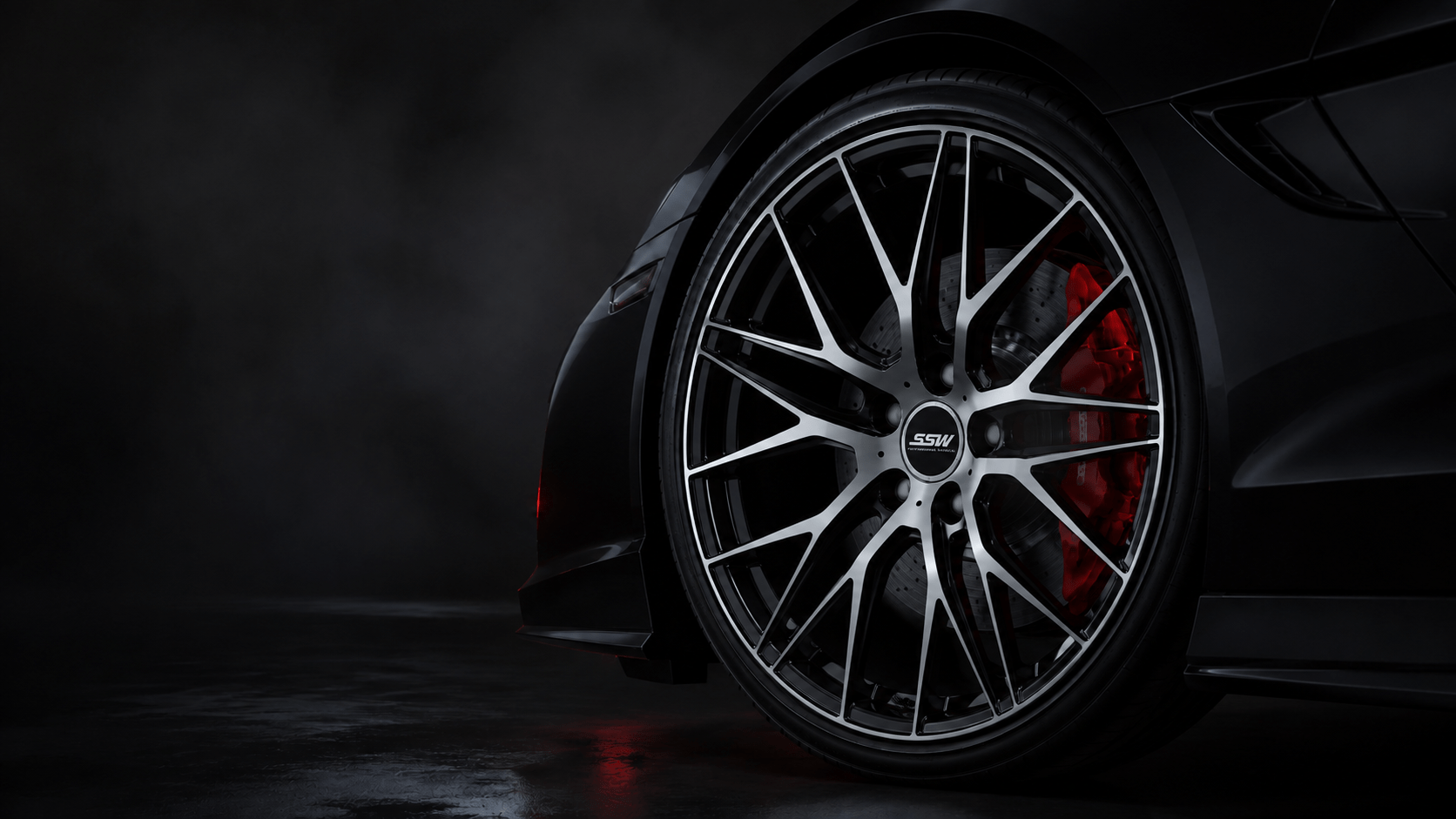
Two alloy wheels may look similar and share the same dimensions, yet differ considerably in weight, construction and performance characteristics. Their design plays an important role, but understanding how each wheel is manufactured provides a clearer picture of what separates one option from another.
Flow formed wheels begin as cast wheel blanks. During production, the wheel is spun while rollers apply controlled pressure to shape and compress the barrel. Depending on the wheel’s overall engineering, this process can reduce weight and improve its structural properties compared with conventional casting. It therefore occupies a practical space between standard cast wheels and significantly more expensive fully forged alternatives.
SSW, short for Stamford Sport Wheels, uses this manufacturing method for its FlowForged range. These wheels combine the practical characteristics of flow forming with SSW’s aftermarket designs, giving drivers an option that balances lower weight, structural capability and distinctive styling.
So, how does flow forming compare with casting and forging, and what can an SSW FlowForged wheel realistically change about your car? The answer begins with a closer look at how each manufacturing process works.
How a Conventional Cast Alloy Wheel Is Made
A conventional cast wheel begins with molten aluminium alloy entering a mould. Once cooled, the wheel is removed, machined and finished. Casting produces complex spoke designs efficiently, so it is widely used for original and aftermarket wheels.
Casting is not a sign of poor quality. Final quality depends on the alloy, casting method, heat treatment, design, manufacturing control and testing. However, a cast barrel may need more material to achieve the required properties, making it heavier than an equivalent design made using a more advanced method.
How SSW Flow Forming Changes the Wheel Barrel
An SSW flow-formed wheel starts with a cast preform. At this stage, the wheel face and a shorter, thicker barrel section have already taken shape. The preform is then mounted on a mandrel and rotated while rollers apply pressure to the barrel.
As the wheel spins, the rollers stretch and compress the aluminium until the barrel reaches its intended profile. SSW explains that this process increases tensile strength and elongation while allowing the finished product to be lighter. In simple terms, the barrel can be formed with less material than a comparable conventional cast barrel while still being engineered for its specified load.
This gives flow formed wheels a useful middle position. The face begins as a casting, but the barrel receives additional mechanical working. You get some material and weight advantages associated with forming, while the manufacturing route remains different from producing an entire wheel from a forged aluminium blank.
Terms such as flow forged, rotary forged and spin forged often describe variations of a cast wheel with a flow-formed barrel. They should not automatically be treated as identical to a fully forged wheel.
What Flow Forming Can Do for Wheel Strength
The pressure applied during flow forming changes the mechanical properties of the barrel. SSW states that stretching and compressing the aluminium increases its tensile strength and elongation. Elongation refers to how much a material can deform before fracture, while tensile strength describes its ability to resist being pulled apart.
These properties help explain the improved strength-to-weight balance of the barrel. That does not make the wheel immune to damage. A deep pothole, collision, incorrect tyre pressure or overloaded vehicle can damage any wheel. Wheel strength must also be considered alongside design, load rating, size, tyre profile and fitment.
SSW lists cornering fatigue, impact resistance and dynamic radial load tests among the checks at its facility. These matter because a wheel experiences repeated loads in several directions. Confirm the correct SSW model details and authenticity instead of relying on how solid a wheel feels in your hand.
Why Lower Wheel Weight Can Affect the Way Your Car Feels
Your wheels form part of the car’s unsprung mass, which includes components that move with the wheel rather than being supported by the suspension springs. When a wheel is lighter, the suspension has less mass to control as the tyre travels over a broken surface.
In the right setup, this can help the suspension respond more readily and may make the steering feel more immediate. Reducing rotating mass can also influence how readily the car accelerates and changes speed. These effects are why enthusiasts often place high performance wheels on their upgrade list.
Manufacturing method alone does not determine the result. A larger SSW wheel may still weigh more than a smaller factory wheel. A wider tyre adds mass, while a lower sidewall can make sharp road edges feel harsher. Alignment, tyre pressure and suspension condition also influence the outcome.
Treat lower weight as one part of overall wheel performance, not as a guaranteed transformation. If the purpose of the upgrade is better response, compare the actual weight of the complete new wheel and tyre package with your current setup wherever model-specific figures are available.
For a closer look at the relationship between wheel weight, suspension response and everyday comfort, read how SSW wheels can influence handling and comfort.
Why Correct Fitment Matters More Than the Manufacturing Label
Even a well-made wheel will not deliver the intended result if its specifications are wrong for your car. Before selecting an SSW design, check the wheel diameter, width, pitch circle diameter, centre bore, offset and load rating.
The PCD must match the bolt pattern. The centre bore must suit the hub, sometimes with the correct hub-centric ring. Offset determines how far inward or outward the wheel sits. An unsuitable offset can create clearance problems and change steering behaviour. The load rating must also suit the vehicle.
Upsizing needs equal care. Moving to a larger diameter normally requires a tyre with a shorter sidewall to keep the overall rolling diameter close to the manufacturer’s specification. An aggressive change can reduce protection against Bengaluru’s potholes and sharp road joints, even when the wheel itself is lighter.
During installation, the mounting surfaces should be clean, the correct hardware used and fasteners tightened to the vehicle manufacturer’s torque specification. The wheel and tyre assembly should then be balanced. These basics directly affect vibration and tyre wear.
What to Expect on Indian Roads
On a smooth road, a lighter setup may feel more responsive during direction changes. In stop-start traffic, the difference can be subtler. On broken roads, tyre sidewall and pressure become especially important because they provide the first layer of impact absorption.
Choose the SSW wheel and tyre as one package. A carefully matched diameter, width, tyre size and pressure is more useful than chasing the largest wheel that fits. If your route includes construction zones or monsoon-damaged streets, retaining adequate sidewall can be wiser.
After a significant impact, look for visible bends, cracks, pressure loss or new vibration. Have the assembly checked professionally if anything changes. A flow-formed barrel can still be damaged despite its improved material properties.
How to Choose the Right SSW Flow-Formed Design
Start with your vehicle, not the catalogue image. Confirm the original wheel and tyre specifications, then decide what you want the upgrade to achieve. Your priorities may be lower weight, a different stance, easier cleaning, a particular finish or a balanced combination of these factors.
Shortlist only SSW models with the correct specifications and load rating. Ask for the model’s actual weight rather than assuming every FlowForged design is equally light. Spoke shape, width, diameter and load requirement can change the final number.
Consider maintenance too. Bengaluru’s dust, rainwater and brake residue collect around intricate spokes. An easy-to-clean design may suit a daily driver better. Use a mild, wheel-safe cleaner on cool wheels and avoid harsh chemicals that could affect the coating.
SSW offers different visual styles across its wheel range, so the final choice can still complement your car without ignoring engineering basics. This overview of SSW alloy wheel style, strength and performance can help you consider the aesthetic side alongside construction and road use.
SSW Flow-Formed, Cast and Fully Forged Wheels Compared
The three categories serve different priorities. The comparison below is a practical guide, not a substitute for checking the specifications of an individual wheel.
| Wheel Type | Basic Manufacturing Route | Typical Advantage | Point to Consider |
| Conventional cast | Molten alloy is cast into the wheel shape | Design flexibility and accessible pricing | May require more material in the barrel |
| SSW flow-formed | Cast preform with a barrel shaped under pressure while spinning | Stronger strength-to-weight balance in the formed barrel | Not the same as a fully forged wheel |
| Fully forged | Wheel is produced from a forged aluminium blank and machined | High strength-to-weight potential | Usually carries a higher purchase price |
SSW’s flow-formed option can suit drivers who want a lighter performance-led construction without moving to a fully forged setup. A conventional SSW cast wheel may still make more sense when budget and styling matter more than reducing weight.
If you are deciding between an aftermarket set and your original rims, the guide to SSW alloy wheels versus OEM alloy wheels explains the broader differences in design choice, fitment and ownership considerations.
The Right SSW Wheel Is a Complete Fitment Decision
The value of flow formed wheels lies in how the barrel is produced. Forming the cast barrel under pressure while it spins can improve its mechanical properties and create a better strength-to-weight balance than a comparable conventional casting. For an SSW buyer, that can offer a practical step between a regular cast wheel and a fully forged option.
The manufacturing process is only the starting point. Good wheel performance depends on selecting a genuine SSW wheel with the correct size, offset, centre bore, bolt pattern and load rating, then pairing it with an appropriate tyre and installing it correctly. When those details work together, the upgrade is more likely to suit both your car and the roads you drive every day.
At Car Decor, the fitment process includes checking these specifications and setting up the selected rims correctly for your car. The focus remains on compatibility, appropriate tyre pairing and proper installation.
Visit Car Decor to have your rim fitment carried out by experts who can guide you through the selection and installation process.